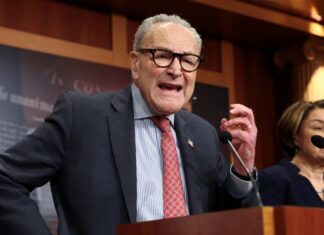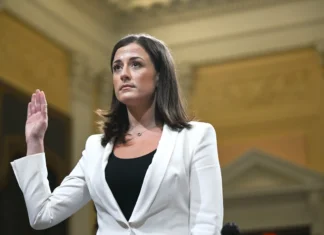
House Republicans once again dragged the Southern Poverty Law Center into the spotlight Thursday during a Judiciary Committee hearing that quickly turned into a broader fight over political extremism, free speech, and the weaponization of the term “hate group.”
The hearing focused heavily on allegations that the SPLC misled donors while using its influence and funding apparatus in ways critics argue were deeply political rather than purely focused on combating extremism.
The Southern Poverty Law Center: Manufacturing Hate https://t.co/zA2p9ri3Zr
— House Judiciary GOP 🇺🇸🇺🇸🇺🇸 (@JudiciaryGOP) May 20, 2026
Republicans repeatedly pointed to the SPLC’s controversial “hate map,” which has long labeled various conservative and Christian organizations as extremist groups alongside actual violent organizations. Critics have argued for years that the map blurs ideological disagreement with genuine threats and unfairly stigmatizes mainstream conservative groups.
That criticism intensified after the 2012 shooting at the Family Research Council headquarters in Washington, D.C.
The SPLC told donors their money would dismantle violent extremists.
Instead, the Biden-Harris administration partnered with them to target Christians and conservatives.
🎥: @RepBenCline pic.twitter.com/wPs571n2r1
— House Judiciary GOP 🇺🇸🇺🇸🇺🇸 (@JudiciaryGOP) May 20, 2026
In that attack, gunman Floyd Lee Corkins entered the building armed and wounded a security guard before being subdued. Corkins later admitted he specifically targeted the organization after finding it listed on the SPLC’s hate map.
Republicans at Thursday’s hearing argued the incident demonstrated the real-world consequences of labeling political opponents as hate groups.
The hearing also centered on allegations involving the SPLC’s internal financial practices and donor communications. Committee Republicans referenced accusations that the organization funneled money toward individuals tied to extremist movements while simultaneously fundraising off claims it was combating hate and protecting vulnerable communities.
Jamie Raskin is either CLUELESS or LYING:
He’s pushing the WIDELY-DEBUNKED Charlottesville Hoax during a hearing exposing the FRAUD of the Southern Poverty Law Center FUNDING those exact extremist groups — who President Trump CONDEMNED.
“Trump could only bring himself to say… pic.twitter.com/f8BaOSz3z4
— Townhall.com (@townhallcom) May 20, 2026
Democrats, meanwhile, largely defended the SPLC’s broader mission and shifted focus toward far-right extremism and white nationalist violence.
Keep throwing lawyers at these clowns until they learn.
— Tek Roo 🇺🇸 (@Tek_Roo) May 20, 2026
Rep. Jamie Raskin used part of his remarks to revisit the Charlottesville controversy and once again accused President Trump of praising extremists during his comments following the 2017 rally.
Raskin repeated the long-running “very fine people on both sides” claim, which remains one of the most politically disputed narratives from Trump’s first term. Critics of that framing continue to point out that Trump explicitly stated during the same remarks that he was “not talking about the neo-Nazis and the white nationalists, because they should be condemned totally.”
Can you believe Jamie Raskin is still perpetuating this hoax! pic.twitter.com/Bdpk8XnHNz
— Blondelady2024 (@arva61138) May 20, 2026
Still, Democrats continue citing the quote as evidence of Trump minimizing extremism, while Republicans argue the full context has been repeatedly distorted for political purposes.