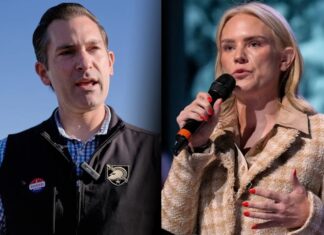
On Wednesday, Kansas officials announced a stunning legal move that cuts to the core of election integrity concerns — charging the mayor of a small town with casting votes while allegedly not being a U.S. citizen.
The case, centered on Joe Ceballos, the mayor of Coldwater, Kansas, touches off yet another chapter in the long-running national debate over noncitizen voting and election security.
Kansas Secretary of State Scott Schwab and Attorney General Kris Kobach — both elected Republicans — filed six charges against Ceballos, a lawful permanent resident originally from Mexico.
According to the charges, Ceballos cast ballots in elections held in 2022, 2023, and 2024 — a serious offense under both state and federal law if proven true. Among the charges: perjury and unlawfully voting without proper qualifications, carrying potential prison time exceeding five years.
This case is not happening in a vacuum. For years, Kobach has been one of the most visible figures nationally in the push for stricter voter ID laws and tougher enforcement against illegal voting.
His background includes a 2018 court loss after attempting to mandate physical proof of citizenship during voter registration — a requirement that federal courts struck down due to a lack of compelling evidence that widespread noncitizen voting was taking place. Yet Kobach has remained undeterred, and this latest development may bolster his argument that the problem is more prevalent than previously acknowledged.
The details of how investigators identified Ceballos remain undisclosed, but Kobach insists the evidence is “unassailable.” What makes this case even more politically and legally charged is that Ceballos was not just a voter — he was a candidate. As of Election Day, he was on the ballot for reelection as Coldwater’s mayor, although the official results have yet to be certified.
Under Kansas law, holding public office requires U.S. citizenship, a requirement that Kobach highlighted during his remarks — though he clarified that serving as a noncitizen is not, by itself, a criminal offense. Still, it raises urgent questions about vetting and oversight, especially in smaller jurisdictions where verification processes are often limited.
Perhaps most striking in Kobach’s comments was his broader warning: “Noncitizen voting is a real problem… it happens fairly frequently.” That claim runs counter to the conclusions of several federal investigations over the years, which found isolated cases but not widespread fraud. Still, Kobach and Schwab are now leveraging a federal immigration database to cross-reference voter rolls — a new tactic that could yield further charges in months ahead.