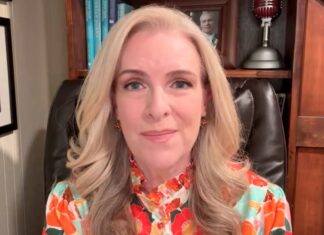
The clash over immigration policy took on sharper definition this week as Democratic Senate candidate James Talarico drew a firm line in the sand—one that underscores just how fractured and volatile the national debate over border enforcement has become.
Speaking during an interview in Dallas, Talarico made clear he would oppose the nomination of Sen. Markwayne Mullin to lead the Department of Homeland Security, but his reasoning went far beyond a typical partisan objection.
His stance hinges on a sweeping demand: the dismantling of Immigration and Customs Enforcement, which he described in stark terms as a “secret police force.” That language alone signals the intensity of the ideological divide now shaping immigration politics.
Talarico’s argument is rooted in personal experience as much as policy. Reflecting on his time as a public school teacher in San Antonio, he pointed to undocumented students he taught, describing them as deeply patriotic and invested in the American ideal.
In his framing, the current enforcement apparatus is not merely flawed—it is actively harmful, targeting families and communities rather than focusing on genuine threats.
From there, he pivots to what he sees as a misalignment of priorities. Instead of broad enforcement actions, Talarico argues for a more targeted approach: focusing resources on cartels, human traffickers, and violent actors while leaving nonviolent immigrants—workers, families, small business owners—out of the crosshairs.
It’s a message designed to walk a narrow line, attempting to blend security with compassion in a debate that often treats the two as mutually exclusive.
But the political reality complicates that vision. Mullin’s nomination has already advanced out of committee in a razor-thin 8-7 vote, with unusual bipartisan crossover signaling that this is not a clean party-line battle. That alone suggests the upcoming Senate vote could become a flashpoint, not just over one nominee, but over the future direction of federal immigration enforcement.
What makes Talarico’s position notable is not just its substance, but its timing. As both parties grapple with the consequences of years of policy shifts, enforcement controversies, and public frustration, his remarks reflect a broader recalibration happening within Democratic circles—one that is increasingly willing to challenge long-standing institutions rather than simply reform them.
Whether that approach gains traction or alienates voters remains an open question.